At first glance, you might not expect which dessert takes center stage on a Lunar New Year table in China. Not the pillow-soft tang yuan filled with black sesame paste, nor the perfectly crisp sesame balls, or even ba bao fan—the “eight treasure rice” adorned with a mosaic of dried fruits and nuts. Surprisingly, the sweet that rises above them all is far more modest in appearance. But it’s the only one to share a name with the holiday itself—and that makes it, without question, the quintessential Chinese New Year dessert.
Literally translated to “year cake” in Chinese, nian gao is the modest yet delicious treat that’s essential to a proper New Year celebration. Its name is a homonym for “high year,” and this auditory likeness makes the dessert a symbol for prosperous times ahead. Like its aforementioned tablemates, nian gao takes advantage of versatile, extra-sticky glutinous rice. In this case, the rice is pounded into a fine flour, made into a smooth batter, then cooked into a dense, chewy cake. Many versions of nian gao exist—some are even savory—but the standard preparation is minimalist: steamed, lightly sweetened, minimally adorned.
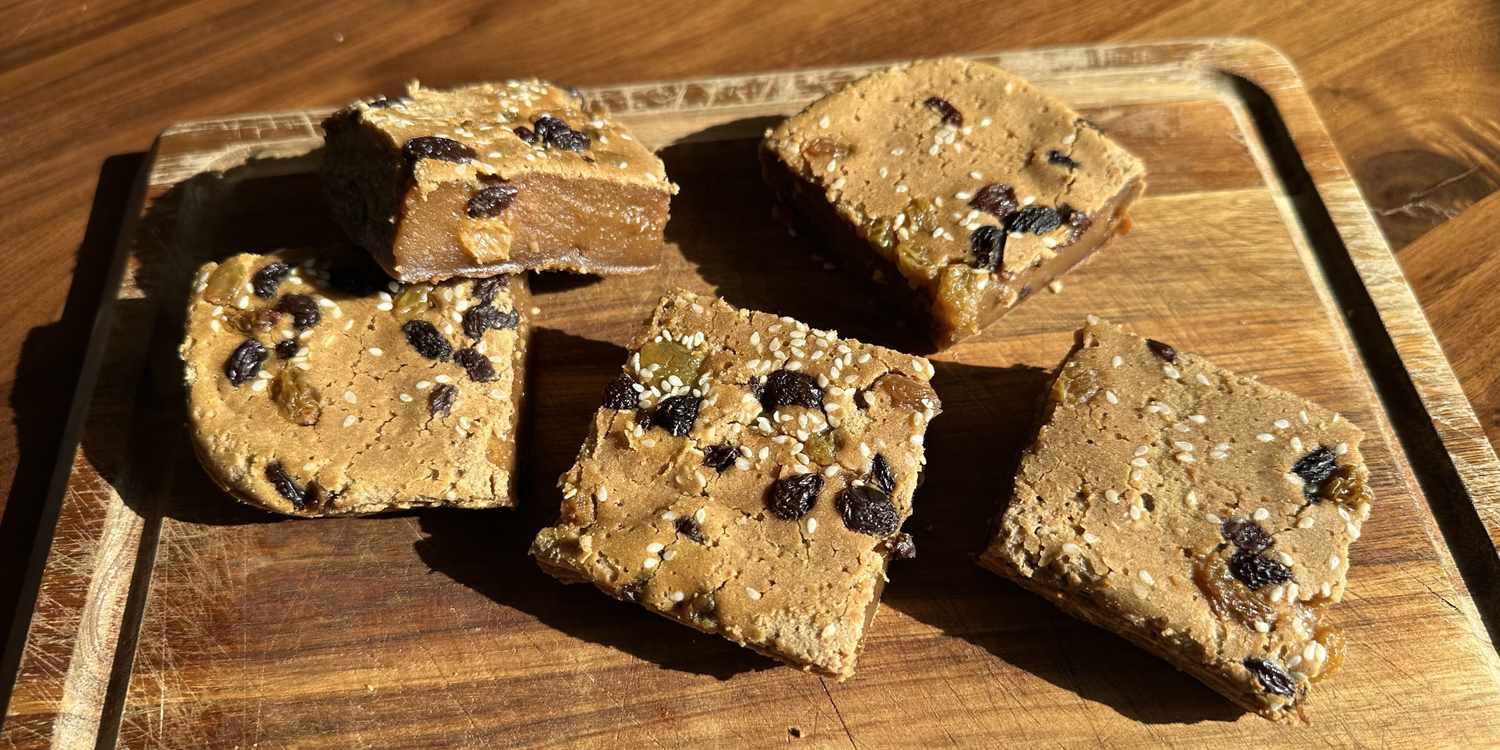
However, when I was a kid, my mom would make a baked version of nian gao that I believe is even better than the original. Baked nian gao is rare back in mainland China; ovens aren’t common in Chinese kitchens. Similarly, it can be difficult to source a good steamer setup in the U.S., so many Chinese American families opt to bake their nian gao instead. With a few more tweaks, such as adding eggs, swapping water for coconut milk, and bumping up the sugar, you get a slightly more decadent, arguably more delicious nian gao that sports a delightful crust on the outside. My mom would whip up this style of nian gao year-round, which is a testament to its tastiness.
Unfortunately, my mom recently lost the printed nian gao recipe she had long followed. After we attempted to remake it from memory (to some degree of failure), I set out to develop an upgraded version of this recipe that we’ll have for time immemorial. Additional pros: This recipe is gluten-free, dairy-free, and only requires five ingredients (not including optional toppings), all of which should be easily found at any Asian grocery store.
How To Make Nian Gao
Ethan Pan
What You’ll Need:
- Glutinous rice flour: This recipe’s proportions build off one 16-ounce package of this flour, which is readily available at most Asian grocers. Do not confuse it with regular rice flour, which cannot be used as a substitute in this recipe. For the popular brand Erawan, the glutinous rice flour comes in a green (not red) bag. Another flour option is Japanese mochiko, usually described as sweet rice flour. This comes from the same rice variety but is less finely milled, which can result in a denser texture.
- Coconut milk: Full-fat coconut milk is critical to this recipe, giving it flavor, body, and a relatively nonstick texture. Look for the Aroy-D brand.
- Chinese brown sugar: The customary sugar used for nian gao tends to have a more intense, almost rummy flavor compared to Western brown sugar. Traditionally it’s found in slabs that must be dissolved separately, but powdered versions are easy to find and easier to work with. In a pinch, you can substitute this with regular brown sugar.
- Optional toppings: Steamed nian gao is often topped with dried jujubes and/or sesame seeds. I opt for raisins, as my mom always included them.
Baked Nian Gao Recipe
Makes: 15 squares
Ingredients
- 3 eggs
- 2 13.5-ounce cans of coconut milk
- 1 1/3 cups Chinese brown sugar, packed
- A pinch of salt
- 1 16-ounce package of glutinous rice flour
- 1 cup toppings of your choice, such as raisins, red bean paste, or sesame seeds (optional)
Directions
- Preheat oven to 350 degrees F.
- In a large bowl, whisk the eggs, coconut milk, brown sugar, and salt until well combined.
- Add in the glutinous rice flour and whisk until smooth. The consistency should be somewhere between brownie and pancake batter.
- Transfer the batter to a 9×13 baking dish. Optionally, you can line the bottom of the baking dish with parchment paper, which helps with removing the nian gao.
- Sprinkle any toppings in an even layer atop the batter.
- Bake the nian gao for 60 to 70 minutes, or until an inserted toothpick comes out mostly clean.
- For best results, let the nian gao fully cool in the baking dish, then run a knife along the sides and remove it as one whole piece. If you used parchment paper, you can turn it out onto a cutting board, or use your hands to gently lift it out. Cut into squares. Store at room temperature, loosely covered, for up to a week.
Tips for Making the Best Nian Gao
- Mix liberally. Despite its name, glutinous rice flour does not contain gluten, so your batter doesn’t really run the risk of overmixing. A few small lumps of flour or sugar are okay.
- Get creative with the toppings. Red bean paste and sesame seeds give it a traditional flair, but combinations such as shredded coconut and pecans would also work well. I recommend using at least one sweet topping, since the batter itself is not very sweet. Keep the toppings to a maximum of one cup in total.
- Keep it non-stick. The oil in the coconut milk helps prevent the nian gao from sticking to the baking dish. That being said, parchment paper can help with removal. Use a small amount of batter to help the paper adhere.
- Don’t fret too much about the bake time. This is a forgiving recipe. Underbaking the nian gao will result in it being slightly gooey; overbaking it will result in dried out edges. Neither issue is as noticeable or as sensitive as, say, a flour cake. Use a toothpick (or, as my mom does, a chopstick) to test for doneness. It will never come out fully clean, but it should have a minimal amount of cooked—not liquid—batter on it.