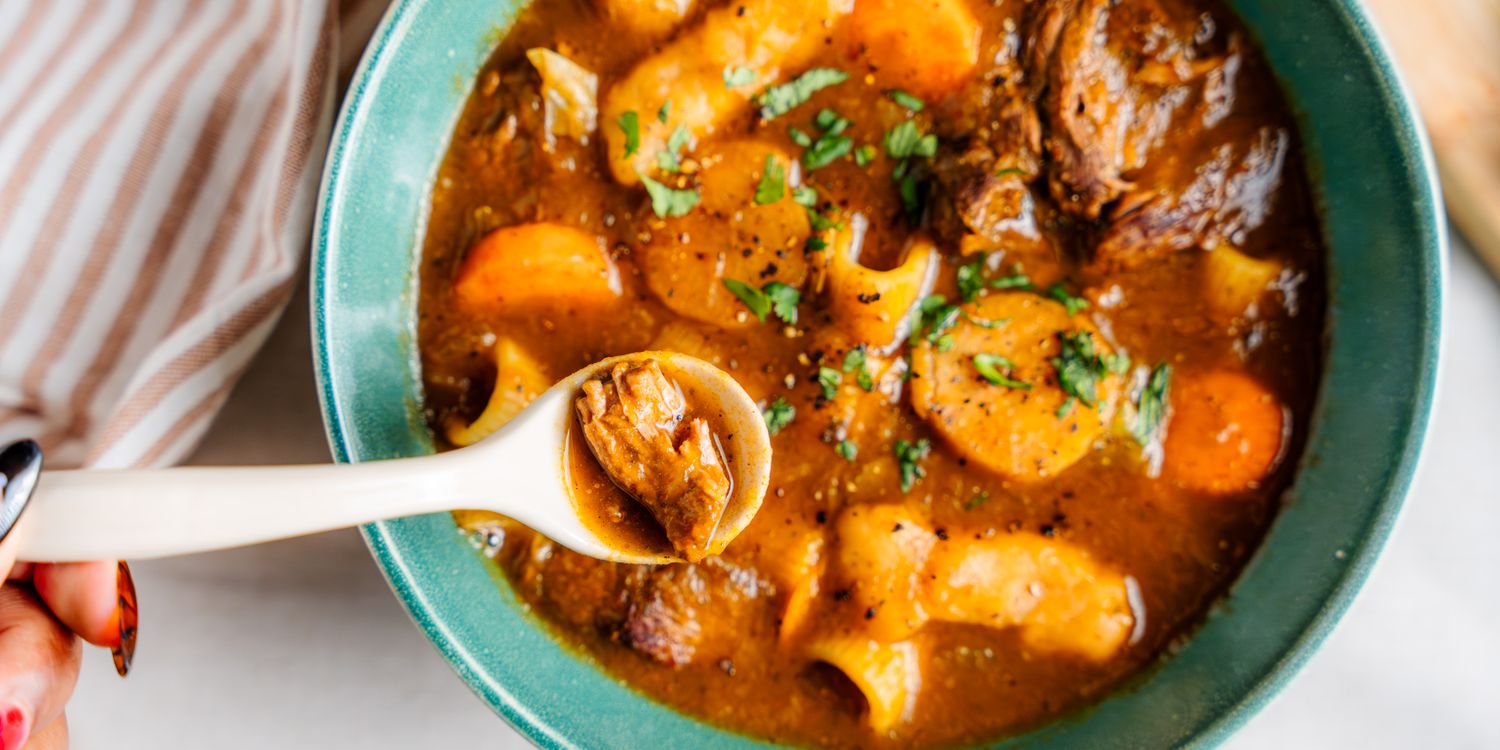
“If you don’t eat soup joumou on New Year’s Day, you’ll have a bad year,” my dad always told me growing up. On January 1, I would scramble to get my siblings and myself dressed so we could make it to my grandmother’s house for a bowl. By any means necessary, I had to have it. It wasn’t until around first grade that I truly began to grasp the history behind the dish—that’s when my dad’s message finally clicked. While skipping soup joumou might not bring a sour future, he saw it as a way for us to intentionally start the year reflecting on our culture’s revolutionary history.
As I got older, I made it a point to visit my grandmother’s kitchen on January 1st, watching her move effortlessly as she prepared soup joumou. I noticed the seasonings she chose, how she cut the squash, and the devotion she poured into every pot. After savoring bowl after bowl, I watched her fill repurposed Country Crock butter containers with the stew to share with her friends at nursing homes or members of her church community.
When I moved into my first apartment in Chicago, I followed my grandmother’s same routine—with some tweaks, of course. I dove into the history of the Haitian Revolution, reading authors like Edwidge Danticat and exploring cookbooks from Haitian chefs like Gregory Gourdet. In my own kitchen, I found my rhythm: seasoning, tasting, and adjusting spoonfuls of epis (classic Haitian seasoning that imparts bright and spicy flavors) until the soup mirrored my grandmother’s. I packed containers to share with friends, but more than anything, I spent every New Year’s Day filled with pride for my Ayisyen ancestors and our profoundly powerful legacy.
The History of Soup Joumou
Ashia Aubourg
Soup joumou took root as a Haitian staple in 1804, when Ayiti emerged as the first free Black republic after more than a decade of resistance and centuries-long occupation by French colonizers. Long before independence, African and Taíno people cultivated squash as sustenance during periods of violence and control, dating back to the 17th century. The word joumou means squash in Haitian Creole, and the vegetable acts as the foundation of this stew that enslaved Haitians once prepared exclusively for French colonizers. On January 1, 1804, Marie-Claire Heureuse Félicité, wife of revolutionary leader Jean-Jacques Dessalines, reclaimed soup joumou as a decolonized dish, serving it to nourish freed Haitians and mark their liberation.
Today, Haitians across the diaspora continue that legacy each New Year’s Day, gathering around pots of this liberating stew. Every community, household, or matriarch prepares soup joumou a little differently, yet the soul of the dish remains constant: calabaza squash native to the Caribbean, starchy vegetables, aromatic herbs, and epis.
Soup joumou invites reflection as much as sustenance. Each bowl offers a chance to honor Haiti’s liberatory history while imagining ways to uplift its people today. Share it with loved ones when possible, or extend the tradition by bringing a bowl to a neighbor. For those outside the diaspora, if you decide to make this soup, consider doubling this recipe while at the grocery store and donating a bundle of the ingredients to a local pantry so others can experience it, too. More than nourishment, soup joumou delivers a moment to study the past and begin the new year grounded in community and empathy.
Below, I’ve shared my recipes for epis and soup joumou, which I first learned from my grandmother, Immaculée Aubourg, who came from Ayiti to Boston in the ’70s. Over the years, I’ve continued refining them to mimic the flavors I remember from her kitchen.
How to Make Haitian Epis
Ashia Aubourg
Ingredients
- 1 small white onion, chopped
- 2 celery stalks, chopped
- 1 red bell pepper, chopped
- 1 scotch bonnet, halved with seeds and stems removed
- 2 scallions, chopped
- 6 garlic cloves, peeled
- 1 cup cilantro, chopped
- 1/2 cup parsley, chopped
- 5 thyme sprigs, stems removed
- 1 chicken bouillon cube
- 1 teaspoon cayenne pepper
- 1 teaspoon cloves
- 1 tablespoon white vinegar
- 1 lime, juiced
- 1/2 cup olive oil
Directions
- Place all the vegetables and herbs in a blender along with the white vinegar, lime juice, and olive oil, and blend until smooth.
- Store the epis in the fridge in an airtight container for 1 month.
How to Make Haitian Soup Joumou
Serves 6
Soup Joumou Ingredients
- 2 pounds boneless beef stew meat, cut into 1-inch pieces
- 7 tablespoons Haitian epis seasoning
- 2 limes
- 1 1/2 pounds calabaza squash, halved and seeded
- 1 cup leeks, diced
- 1/2 cup celery, diced
- 1/2 cup onion, diced
- 2 tablespoons tomato paste
- 1/2 beef bouillon cube
- 2 chicken bouillon cubes
- 1/2 teaspoon cayenne pepper
- 6 whole cloves
- 1/2 teaspoon ground ginger
- 1/2 teaspoon ground allspice
- 1 cup carrots, sliced into rounds
- 1 cup Yukon Gold potatoes, diced
- 1 1/2 cups cabbage, chopped
- 1 scotch bonnet pepper, stem removed and pierced
- 8 cups chicken stock or water
- 1 box mezze rigatoni pasta
- Salt and freshly ground black pepper, to taste
- Avocado oil
Dumpling Ingredients
- 2 cups all-purpose flour, sifted
- 1 1/2 teaspoons adobo seasoning
- 1 teaspoon salt
- 1 teaspoon ground black pepper
- 1/2 cup water
Directions
- Rinse the beef under cold water, drain well, and place in a large bowl. Rub the meat with 4 tablespoons of epis, the juice of 1 lime, and 2 teaspoons salt. Cover and marinate for at least 1 hour or preferably overnight in the refrigerator.
- Preheat oven to 400 degrees F. Place the squash halves, cut-side up, on a parchment-lined baking sheet. Drizzle the squash with avocado oil and season with salt and pepper, and roast for 30 to 45 minutes or until fork-tender.
- Let the squash cool slightly, then scoop out flesh and purée in a blender until smooth. You should end up with about 4 cups; set aside.
- Bring the marinated beef to room temperature and pat dry with paper towels.
- Heat a large Dutch oven or heavy pot over high heat. Add 1 tablespoon of avocado oil. Working in batches, sear beef on all sides until browned, adding more oil as needed. Remove the beef and set it aside.
- Reduce the heat to medium. Add a little more avocado oil if needed, scraping up any browned bits from the bottom of the pot.
- Add the leeks, celery, and onion; sauté until softened and translucent, about 5 minutes.
- Stir in the tomato paste, beef and chicken bouillon cubes, cayenne pepper, cloves, ginger, allspice, 1/2 teaspoon salt, 1/2 teaspoon black pepper, and the remaining 3 tablespoons epis. Cook for 1 to 2 minutes, until fragrant.
- Return seared beef to the pot. Add squash purée and chicken stock. Bring everything to a boil, then reduce the heat to low, cover, and simmer for about 1 1/2 hours, or until beef is fork-tender. Check on it periodically to make sure the stew isn’t sticking to the bottom of the pot.
- Add the scotch bonnet pepper, carrots, potatoes, and cabbage. Simmer uncovered for 20 to 30 minutes, or until vegetables are tender.
- Taste and adjust seasoning with salt, pepper, or additional epis if needed.
- To make the dumplings, in a bowl, combine the flour, adobo seasoning, salt, and black pepper. Stir in water until a firm dough forms.
- Using kitchen scissors or your hands, cut the dough into 2-inch strips about 1/2 inch wide. Drop the dumplings directly into the simmering soup. Cook the dumplings until they float to the surface, about 3 to 5 minutes.
- Meanwhile, bring a large pot of salted water to a boil. Cook the pasta according to package directions.
- Remove the scotch bonnet pepper from the soup. Stir in the juice of a lime.
- Serve the soup joumou with the cooked pasta mixed in. Enjoy it with warm bread or fried plantains.
Tips for Making Soup Joumou
People from the Haitian diaspora prepare soup joumou in countless ways, but you can pretty much count on every version delivering a comforting, hearty stew packed with flavor. Below, you’ll find a few ways to adapt the ingredients, along with tips I’ve picked up from refining this recipe over the years.
- Diversify the protein. While many recipes lean on beef as the main protein, plenty of soup joumou variations mix in other staples like chicken or goat. You can also skip the meat altogether and take a fully vegetarian or vegan approach.
- Epis is necessary. In my Haitian recipes, I always call out epis as a must-have for building flavor. If you want a shortcut, ordering it online works well and still delivers the depth this dish needs.
- Toss is more veggies and starchy ingredients. To give this soup some body, you can mix in starchy add-ins like yucca, turnips, or malanga. You can also add greens like watercress, callalou, or collards.
Taste as you go. Check the soup while it’s simmering to build balanced flavor. Adjust with more salt if needed, add a few spoonfuls of epis for deeper aromatic notes, or increase the heat with another scotch bonnet or a pinch of cayenne. A final squeeze of lime juice just before serving brightens the soup and brings all the spices and herb notes together.