It’s always fun to learn your way around someone else’s kitchen. Sometimes, you pick up clever and useful tips; other times. you leave grateful that said person is not running your home kitchen.
Well, on a recent visit to my aunt’s house, I witnessed her use a strange storage method that was totally new to me. She took a large stack of clean plates from the dishwasher and placed them directly in a drawer right beside it. What?! Drawers aren’t for plates. Shelves are for plates. Everybody knows that.
But, no—my aunt hadn’t stored her plates on shelves in years, and she had no plans to go back.
As it turns out, storing dinnerware in drawers is a kitchen organization trend that’s picked up in recent years—my aunt was just ahead of the curve. Now that I’ve learned her ingenious ways, I urge you to try this plate storage hack for yourself. After all, the better set up your kitchen is, the more you’ll enjoy using it.
The Spruce / Margot Cavin
Why You Should Store Your Plates in Drawers
Safety
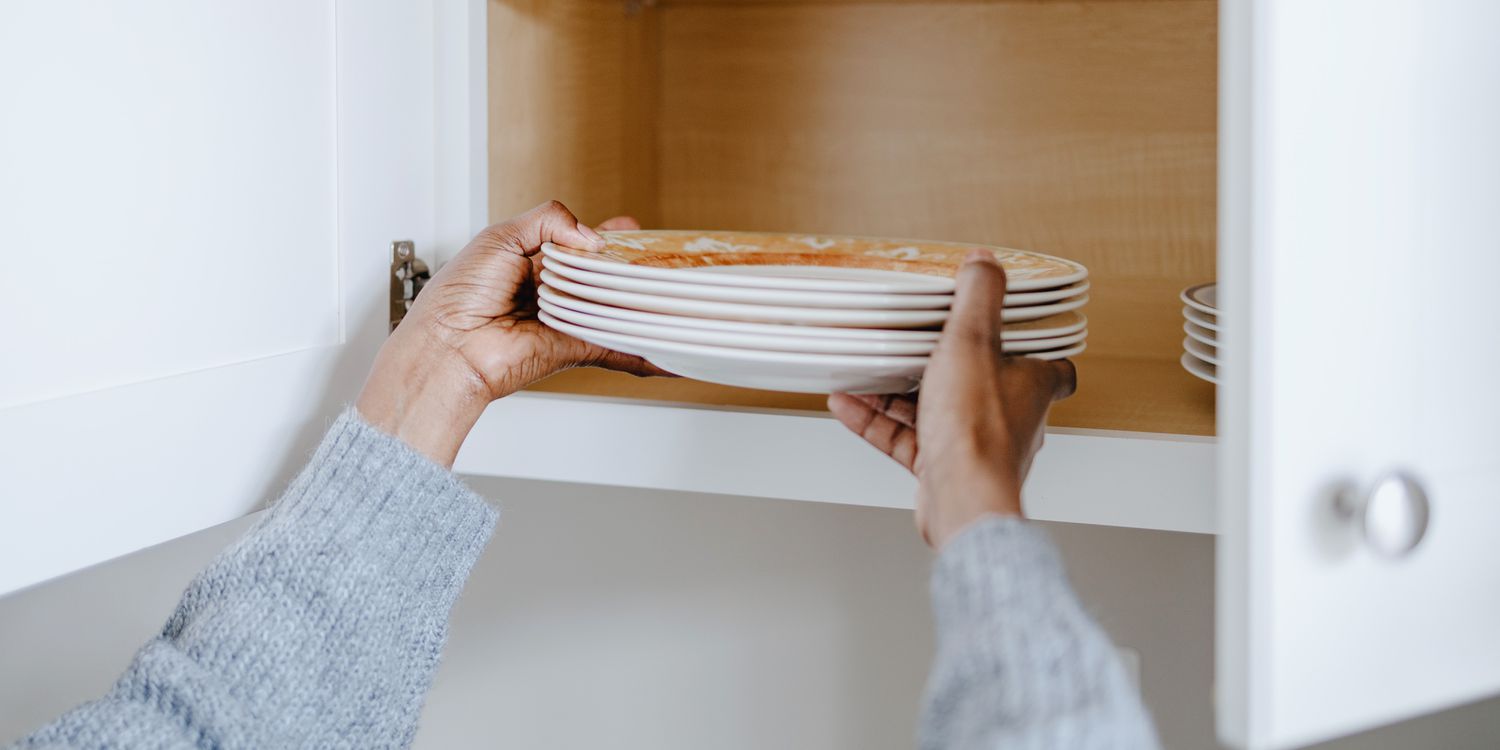
Think about it: plates (especially a stack of them) are some of the heaviest dishes in your whole kitchen, so why are you storing them above your head? It’s almost like a disaster (or injury) waiting to happen.
Instead of keeping heavy items on the top rack, leave your tough-to-reach shelves for light glassware, mixing bowls, Tupperware, and baking tools you aren’t using every day. That way, if you lose your grip and (heaven forbid) something comes crashing down, you won’t break a toe or have to replace an entire china set.
Space Maximization
Sometimes, cabinet shelves are set at awkward heights, and your stack of dishware ends up utilizing only half the available space. That’s valuable kitchen storage going to waste—not to mention, if your shelves are deep, good luck reaching anything in the back quadrant.
Deep drawers, on the other hand, are roomy enough to hold all your place settings. And because they pull out, everything in the back of the drawer is just as easy to reach as what’s in front (something cabinets can’t always promise). This also allows you to see all your options—large plates and cake plates, soup bowls and cereal bowls—in one view, so you know exactly what to reach for. Some designers even add wooden pegs to keep everything neatly in place.
Easier Loading (and Unloading)
Think about how often you have to walk across the kitchen to unload the dishwasher. Store your plates and other dishes as close to the dishwasher as possible (i.e., the drawer next door), and you instantly cut down on the time and energy involved in the frequent unloading process.
Similarly, when it comes to the actual “putting away” action, transferring dishes to a waist-level or lower storage spot spares your body from extra physical strain and ends up being better on your back. This goes for retrieving them as well—just don’t forget to lift with your legs!
Aesthetics
How attractive are your everyday plates, really? They might look nice in a table setting, but stacked up, they don’t need to sit front and center in your kitchen.
Especially if you have open shelving or glass-front cabinets, save your displays for prettier pieces like crystal glasses, fancy decanters, or rustic cutting boards. Basically, anything that adds more to your kitchen’s aesthetic than a stack of clunky plates.
Kid-Friendly
If you have children in the house, this final argument might be your selling point. Storing dishware at a lower level makes it easier for little hands to reach, so they’re less likely to climb onto counters unsupervised when they want a snack. Plus, they might be more willing to help set the table if they can reach all the parts (fingers crossed).
I know it might be “the way you’ve always done it,” but I challenge you to rethink your cabinet storage and consider this new, useful life hack. It’s never too late to refresh the kitchen, especially if that makes it a happier, more useful space for everyone.