 3 min read
- A recent study suggests lobsters may feel pain more similarly to humans than previously thought.
- Researchers and chefs say there are more humane alternatives to boiling lobsters alive, including spiking and electrical stunning.
- Those methods may create extra work or affect texture, but some experts say the industry can adapt.
A recent study conducted in Sweden may change everything you thought you knew about lobsters. The summer staple—whether enjoyed as a hearty bisque, tucked into a lobster roll, or simply steamed with butter—is beloved around the world, and usually costs a pretty penny. But new questions about how lobsters are prepared could end up changing the way we cook them altogether.
According to the study, lobsters displayed pain responses that researchers say are more similar to those seen in humans than previously believed. In the past, those reactions were often dismissed as simple reflexes. But as the study found, “Researchers observed that when Norway lobsters were exposed to electric shocks in water, they attempted to escape by rapidly flipping their tail. However, if the Norway lobster were treated in advance with common painkillers, tail flipping decreased or were eliminated when they were exposed to the potentially painful electric shocks.” Researchers say this finding may also apply to other decapod crustaceans, including crabs, shrimp, and crayfish.
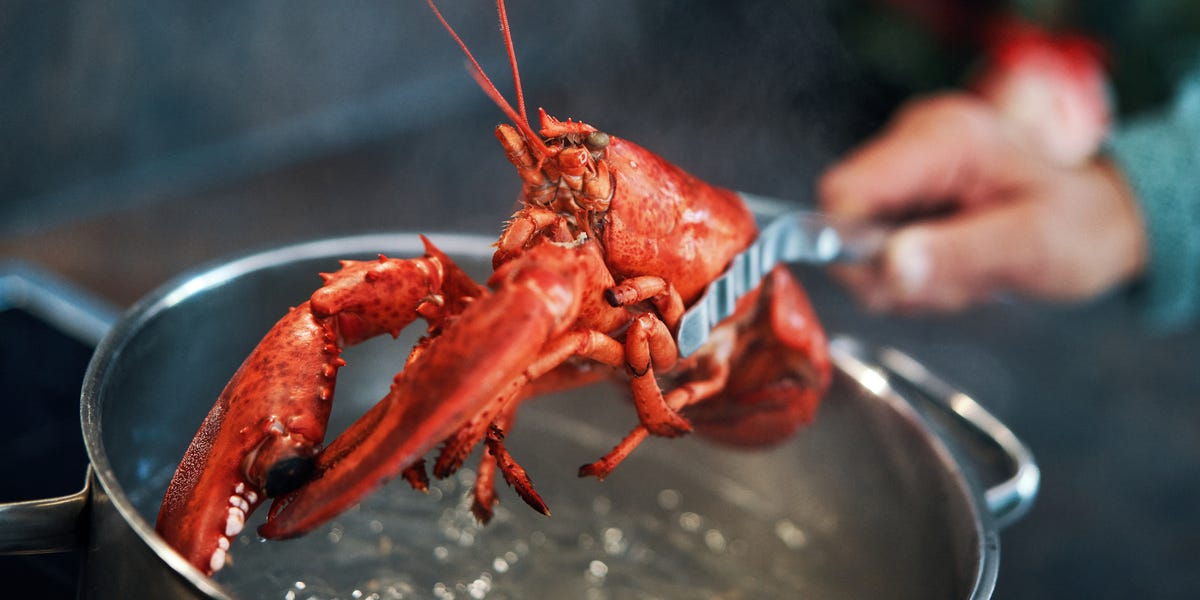
Norway, New Zealand, Austria, and some Australian states have already banned the boiling of live lobsters, while the United Kingdom has proposed similar legislation. Now, this new research has scientists calling for broader restrictions.
Lynne Sneddon, professor of zoophysiology at the Department of Biology and Environmental Science at the University of Gothenburg and one of the scientists involved in the study, tells Delish that there are more humane ways to kill lobsters for human consumption. “One method is to destroy the nervous system, which involves spiking (sticking a knife in) between the eyes to destroy part of the brain, but then the animal has to be turned over and split in half to destroy the rest of the nervous system,” she says.

She also notes that restaurants can use a tabletop electrical stunning machine, which renders the animal unconscious before cooking, though those machines can be expensive. For home cooks, Sneddon says you can place your lobsters in the freezer to stop their nervous systems before cooking. At the end of the day, she emphasizes that these alternatives to cooking them alive do exist.
That said, those alternatives may come with trade-offs. “Cooking lobster alive has always been about protecting the quality,” Chef Chris Valdes explains. “The moment a lobster dies, things start to change quickly, so boiling became the standard because it’s fast, reliable, and keeps the meat at its best.”
With this in mind, freezing lobsters beforehand could affect the overall quality. As Valdes explains, the flavor may be largely unaffected, but the texture can still change. “It can get a little softer, not as juicy. For a high-end plate where you want that perfect bite, it’s not my first choice. But if done right, it’s still workable,” he says.
Delish Senior Food Director Robert Seixas agrees that more humane alternatives are worth considering. He believes the spiking method is likely the most humane, though he also suggested another option: placing lobsters in a hypnotic state before boiling. Apparently, you can balance a lobster on its head and stroke between its eyes to lull it into tonic immobilization.
The drawback of these methods is the added time as part of the prep process. “Restaurants will adjust, we always do,” he says of what might happen if bans become more widespread. “It might mean new equipment, new costs, maybe a shift in how dishes are presented, but that’s part of growth. If there’s a way to respect the ingredient more, I think a lot of us are willing to adapt.”
It will be interesting to see whether these findings actually change the way chefs and home cooks approach lobster from here on out.