My absolute favorite treat as a kid was my own personal chalice of cottage cheese—I’d snap a plastic cup off the 4-pack, rip the seal, and scoop with delight into the creamy, tangy curds. But my indefatigable love for cottage cheese went on a brief hiatus after I ate a container that had gone bad—very bad—and a sickness came on so quick that my mom had to cancel a coveted playdate. (As an eight-year-old, this was a very big deal.)
Time, as they say, heals all wounds, and I fell back in love with cottage cheese at college, where it was plentiful and undeniably fresh at the salad bar. Even now, as a Food Editor, I’m always surprised to see how this modest dairy product has gathered such traction in today’s health food trends, wherein you can add cottage cheese to just about anything from lasagna to banana bread to boost the protein.
Even still, I prefer a generous scoop of Good Culture cottage cheese with a drizzle of good olive oil, a sprinkle of flaky salt, and fresh black pepper—but I’m always checking out new trends in cooking and baking with cottage cheese of all kinds. No matter what I’m preparing, I alway checking to make sure it hasn’t expired first. Here’s everything you need to know before you dig in.
When Does Cottage Cheese Go Bad?
According to the USDA, cottage cheese stays fresh up to one week, or seven days, after it’s opened. With that said, freshness is also dependent on how well it’s stored and handled. First, cottage cheese and other dairy foods that require refrigeration must be kept at a safe temperature of no more than 40 degrees F, according to the FDA. Handling the container runs the risk of introducing bacteria that can shorten the shelf life, which is why it’s important to always open the container with clean hands and utensils. Here are some things to look out for in the meantime.
What To Look For
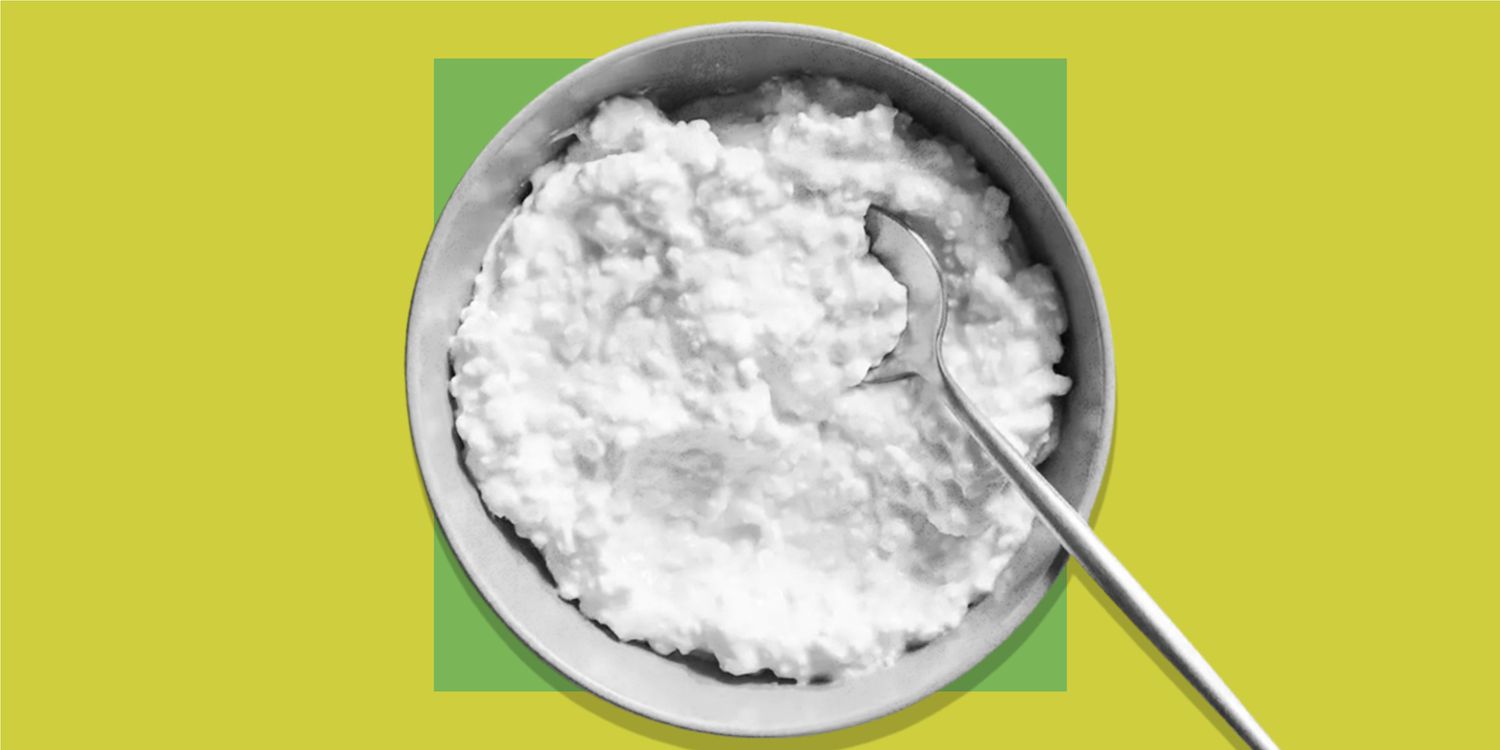
Fresh cottage cheese can vary widely in texture. Made of milk and curds, some cottage cheeses have thicker curds, while others are smaller and the texture more uniform. Different-sized curds are A-OK, and the milky whey surrounding can also vary in creaminess and viscosity depending on percentage of fat incorporated.
- Discoloration. Grey, green, and sometimes pink mold can accumulate on the cheese, or around the rim of the container where the lid is. Any appearance of mold on cottage cheese means it should immediately be discarded, according to the California Dairy Association.
- Separation. While cottage cheese is naturally rather lumpy, due to its curds of varying sizes, there should still be a uniform texture that holds together when scooped. Significant separation can indicate that the cottage cheese has started to spoil. If there is any separation beyond the obvious, like a slimy, “fruity” or “rotten” smelling layer of liquid or goo, that means it has spoiled.
At the end of the day, it’s best to avoid anything but a glassy white, fresh-smelling container of cottage cheese.
Why It’s Important
It’s fairly simple to slice off mold or discoloration from hard cheeses like Cheddar, but soft cheeses like cottage cheese, ricotta, Brie, and others have higher moisture levels. With more moisture, there’s a greater likelihood that mold spores can redistribute and not be as visible.