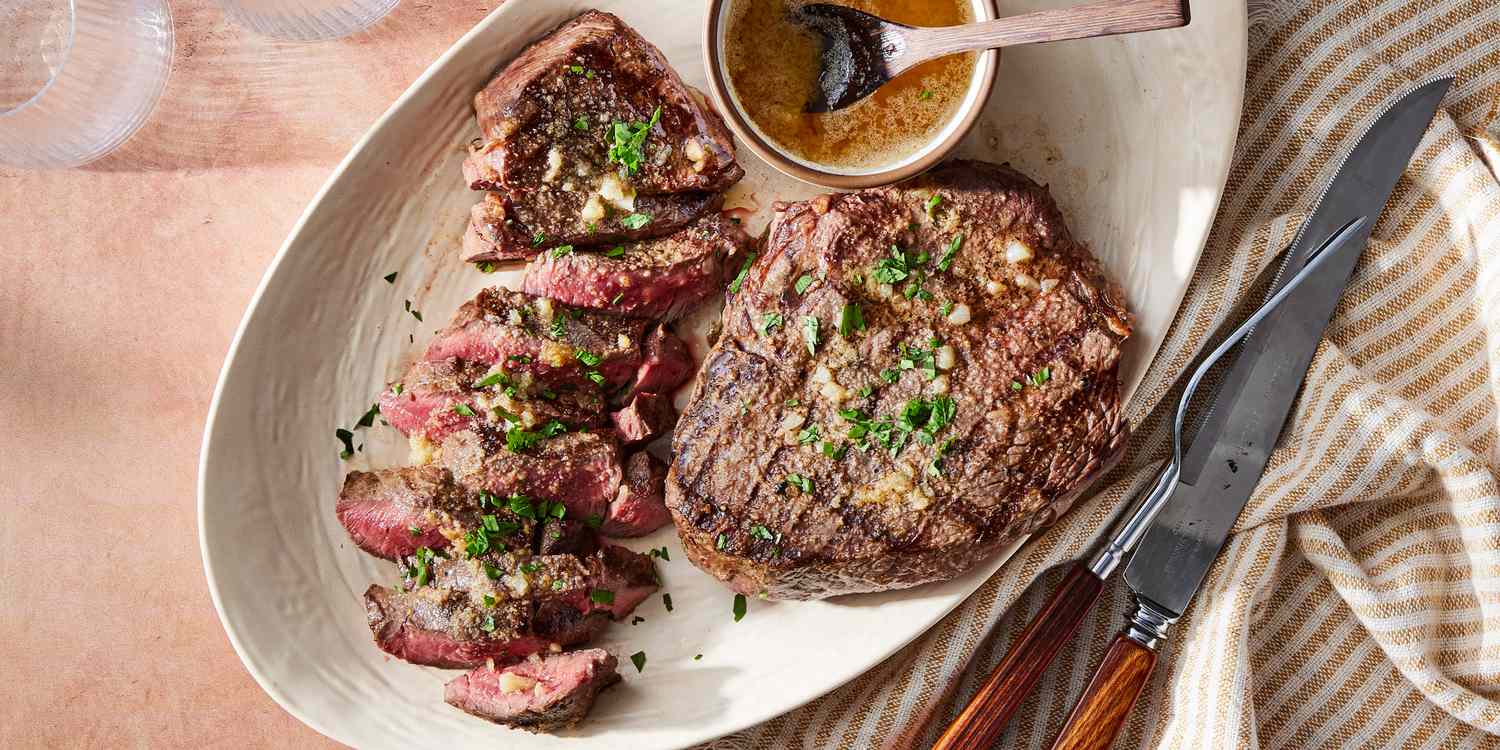
Sirloin and rib-eye—two words listed frequently in grocery stores, on menus, and on cooking shows. In fact, you’ll find these two steaks often pitted against each other in a kind of battle royale of deliciousness. Truthfully, they are both excellent cuts of meat that, when cooked with care, are juicy, tender, and deliver big for your beefy craving.
But which one should you go for? Is one cut really superior to the other? And are you paying more than you need to for steak night?
What Is a Rib-Eye Steak?
boblin/Getty Images
Rib-eye, as the name suggests, comes from the rib section (ribs nine through 11, to be exact) of the cow. Once cut, the rib bone remains attached (hence the name bone-in rib-eye), bringing with it a good amount of fat from the ribs. This bone is then sometimes removed.
This cut is known for its marbling—the rivers of white, succulent fat running through the meat that break down when cooked, yielding unruly amounts of rich flavor and palate-pleasing tenderness. And, it is what makes the rib-eye so popular, especially for steak enthusiasts dining out.
This center rib section of the animal, where the rib-eye cut comes from, doesn’t see much activity during the animal’s life, resulting in the beautiful marbling and tender nature it’s known for. Rib-eye might also be called Delmonico, Spencer, beauty steak, Scotch filet, or even prime rib, which is what you would have if, instead of slicing through the ribs individually, you left the whole bit together as one large roast.
What Is a Sirloin Steak?
Stocksy
Sirloin can get confusing because many different steaks come from this large cut, located behind the ribs but in front of the rump. Such well-known favorites like T-Bone, strip steaks (New York, Kansas City, Omaha), and club steak, as well as roasts like tri-tip, all come from here.
These cuts are leaner than the rib-eye, with less marbling, making them a little less tender and a bit milder. That said, cuts from the top sirloin (T-Bone, strips, etc.) still pack a meaty punch, and their signature chew is flavorful without being tough, pleasing steak aficionados everywhere.
Bottom sirloin might not be sliced into individual steaks, but lean, flavorful roasts like tri-tip are excellent when slow-roasted, making a hearty meal for everyone at the table.
Which Type of Steak Is the Best?
When beef prices are high, choosing the right cut matters more than ever. Sure, steak preference is personal—flavor, texture, and fat content all play a role. But if you automatically reach for rib-eye every time, you might be overpaying for what you actually need.
Rib-eyes are famous for their rich marbling and melt-in-your-mouth texture. They cook quickly and deliver bold, beefy flavor. But that luxury comes at a price. Sirloin, on the other hand, typically costs several dollars less per pound and still delivers satisfying flavor—especially if you cook it properly. It’s leaner, which means less fat but still plenty of beefy punch, and it works beautifully for slicing into sandwiches, serving with eggs, or tossing into stir-fries.
If you’re craving steak but trying to stretch your grocery budget, sirloin may be the smarter pick. Want to boost tenderness? Look for dry-aged options. While dry-aged rib-eye is undeniably indulgent, a dry-aged sirloin can give you big flavor without the rib-eye price tag. In a time when every dollar counts, knowing when to choose sirloin over rib-eye can make steak night feel like a win instead of a splurge.