As a food writer, I often gravitate toward the history of food customs and cooking practices. Lately, I have enjoyed uncovering vintage recipes and studying their publication dates (or lack thereof) to better understand why cooks relied on certain ingredients or techniques at the time. Recently, Allrecipes editor Andrea Lobas uncovered a vintage recipe titled “Thomas Jefferson’s Favorite Bread Pudding.” As a longtime admirer of James Hemings, the Black chef who was enslaved by the third president of the United States, I immediately suspected his influence on the creation of the dish.
In the late 1700s, cooks rarely documented recipes the way many do today. That lack of record-keeping was especially true for Black chefs, whose work often went uncredited during the era of American chattel slavery. Acknowledging that history matters, this bread pudding likely reflects the influence of James Hemings, whose cooking shaped many of the dishes served to Thomas Jefferson.
Allrecipes / Andrea Lobas
Even without direct attribution, several historical details point to Hemings’ influence on this bread pudding recipe. Hemings served as Jefferson’s enslaved chef between 1784 and 1793, during which Jefferson arranged for him to travel to France and train under restaurateur Monsieur Combeaux in the art of French cookery. French cuisine at the time featured custard-based dishes prominently, especially in elite dining, and this bread pudding begins with a custard made from eggs, milk, and sugar. Cognac, a common ingredient in French cooking, also appears in this recipe. Few surviving documents credit Hemings, but the ones that do, such as historic recipes for Snow Eggs and Spoon Bread, transform simple dairy staples and humble ingredients into refined dishes using a combination of French and Southern culinary techniques in the same way this bread pudding does.
While uncovering this bread pudding recipe, uncertainty around its authorship remains, but several clues, in my opinion, point toward Hemings. Drawn in by the possibility of cooking from a legendary presidential chef’s influence, I decided to test this recipe at home. Here’s how it turned out, along with a few ways to make this uncredited, classic recipe your own.
How To Make This Presidential Bread Pudding Recipe
Ashia Auborg
I always look for ways to use up day-old bread, and a leftover baguette made the perfect base for this recipe. To start, the recipe instructs you to cut two pounds of stale bread into half-inch cubes. Adjust the measurements as needed based on how much bread you have on hand. Next, transfer the bread cubes to a 9 x 13-inch baking dish.
Preheat the oven to 325 degrees F. Add one quart of milk and half a pound of butter to a saucepan, and heat on the stovetop until the mixture reaches just below a boil, about 180 degrees F.
In a large bowl, whisk together 10 eggs, two and a half cups of sugar, two teaspoons of cinnamon, two teaspoons of nutmeg, and one tablespoon of vanilla extract. Slowly pour the warm milk mixture into the egg mixture, adding a small amount at a time while whisking vigorously to prevent curdling. Afterwards, stir in two ounces of brandy.
Pour the custard over the bread cubes, then use a large spoon or clean hands to gently mix all of the ingredients. Bake the bread pudding for 45 to 50 minutes, until the top turns golden brown.
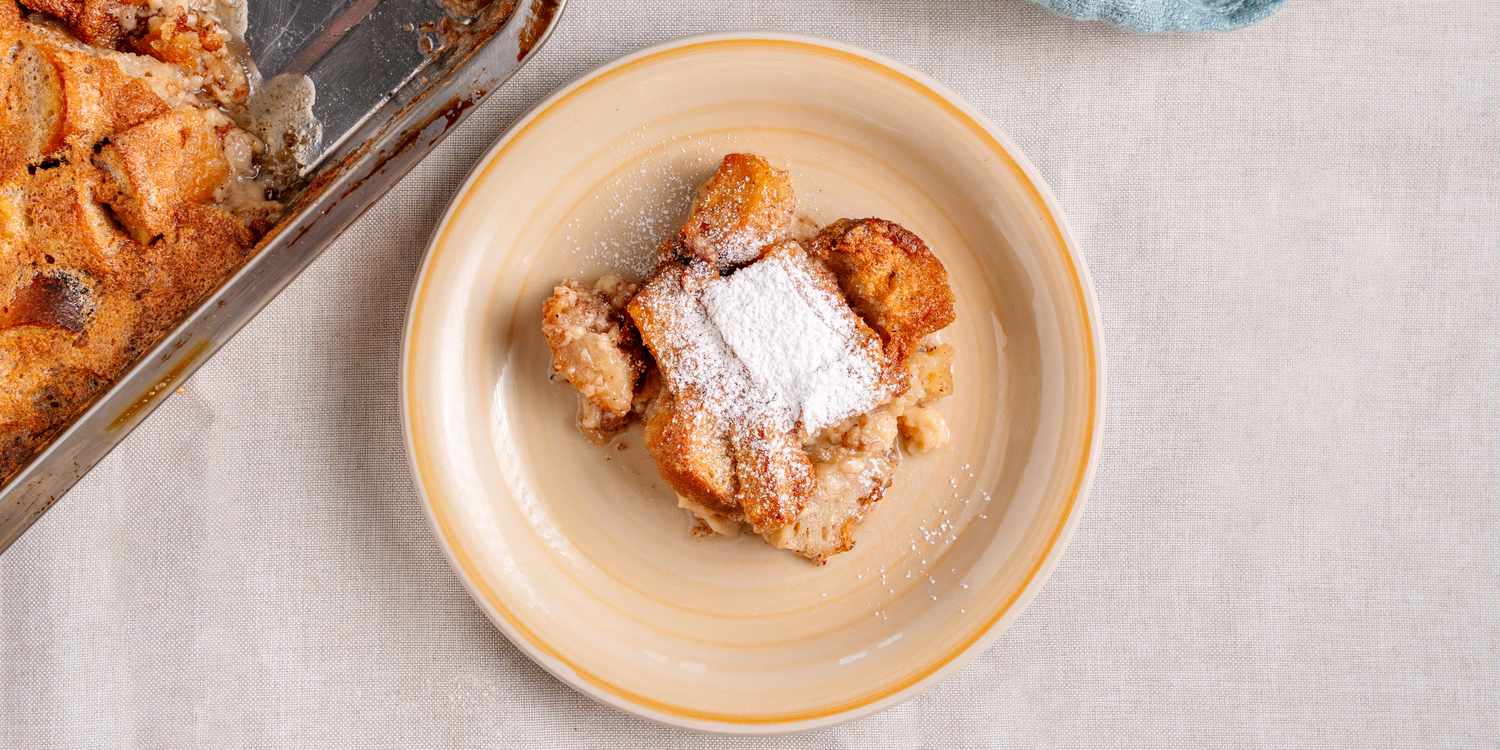
The finished bread pudding delivers a tender, buttery center with warm spice from the cinnamon and nutmeg, plus a lightly crisp top. This recipe turns ingredients that would otherwise go to waste into a comforting sweet treat.
How To Make This Vintage Bread Pudding Your Own
Ashia Auborg
This recipe comes together easily, and while the base tastes great on its own, countless variations can make the dish even more flavorful:
- Use fancy bread. This recipe skips specifics regarding bread choice as long as the loaf is stale. But, for richer flavor and flakier texture, reach for day-old brioche or croissants.
- Swap the booze. Brandy adds whiffs of caramel and dried fruit, but other spirits work just as well. Try rum for vanilla and molasses flavors or bourbon for sweet, marshmallow notes.
- Add flavorful mix-ins. For varied texture in every bite, raid the pantry for dried fruit, nuts, or chocolate, and fold them into the bread pudding for an easy upgrade.
- Give it a fun topping. Pair this custard-like dessert with homemade whipped cream, vanilla ice cream, or a drizzle of caramel sauce.