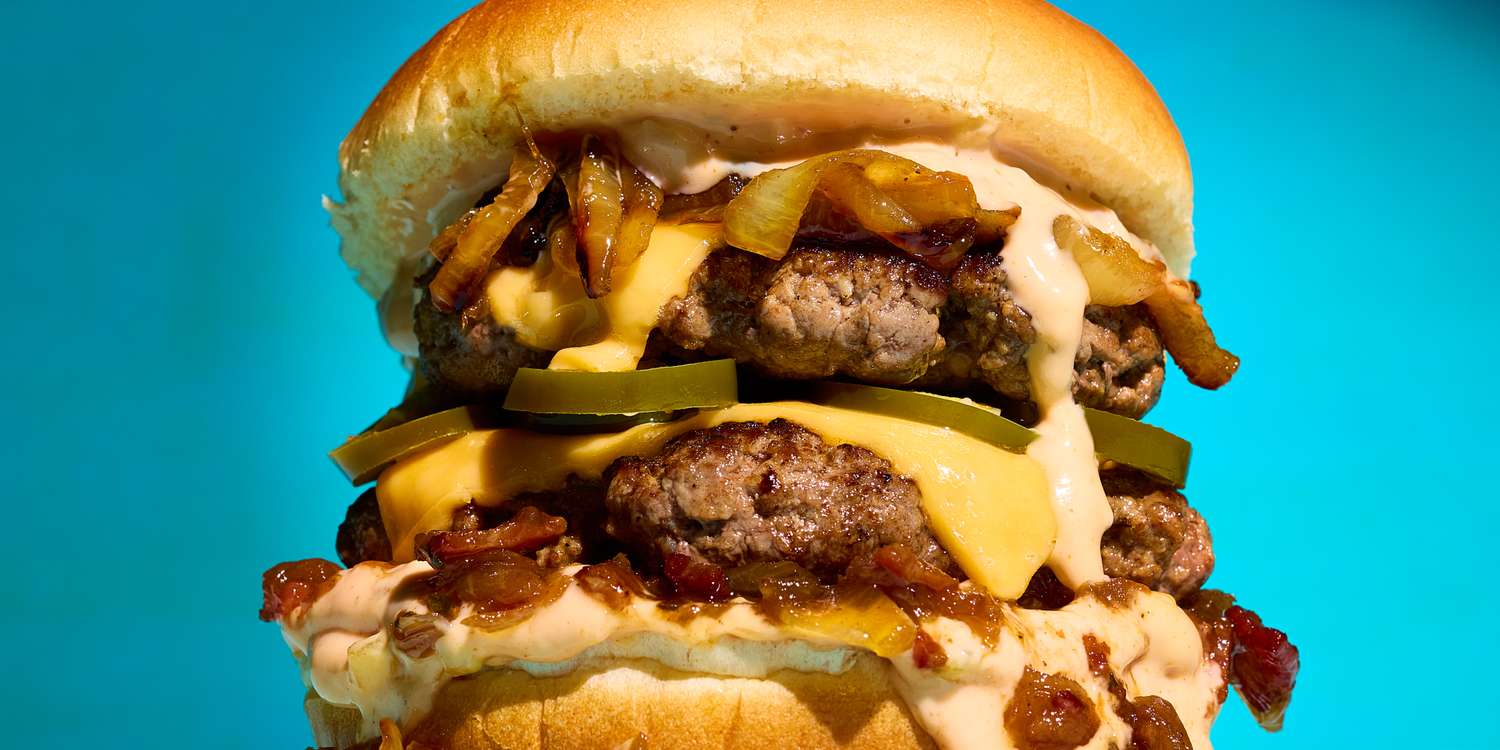
We’ll let others settle the debate on whether smash burgers or steakhouse burgers reign supreme. That’s because we happen to think all burgers are pretty darn delicious—especially those we order out. Even with top-notch recipes like The Perfect Basic Burger, The Twenty Dollar Burger, and a Copycat In-N-Out Double-Double Animal-Style Burger in our arsenals, our DIY dishes never quite live up to those we’re served at restaurants. Which got us wondering, ‘What might we be missing?’
“Restaurant burgers usually taste better because we obsess over the details most home cooks don’t consider,” admits Jeff Martin, chef and partner at Park Cafe, Germantown Cafe and Karrington Rowe. “The biggest key is restraint. Restaurants don’t necessarily do more; we do less, but better.”
With a teaser like that, we couldn’t resist peeking under the bun to get to the bottom of how to make a better burger, chef-style.
Our Panel of Burger-Savvy Chefs
- Eve Aronoff, chef and founder of Frita Batidos in Ann Arbor, Michigan
- Chad Brown, executive chef at Bourbon Steak New York in New York City
- Diego Chaparro, head chef at Warren Street Bar & Restaurant in New York City
- Chris Cortez, executive chef at Fandi Mata in Brooklyn, New York
- Aram Mardigian, executive chef at Borgata’s American Bar and Grille in Atlantic City, New Jersey
- Jeff Martin, chef and partner at Park Cafe, Germantown Cafe and Karrington Rowe in Nashville, Tennessee
8 Chef-Approved Tips To Make Your Burgers Taste as Good as a Restaurant’s
“If home cooks focus on the fundamentals—few, high-quality ingredients, heat, seasoning, and confidence to let the burger cook without fussing—their burgers would immediately get better. When you stack a few small advantages together, the difference becomes obvious in the first bite,” Martin tells us.
We asked Martin and five other beef buffs to share their secrets.
Start with high-quality, 80/20 beef.
You need not seek out something as exclusive as coveted Kobe (a premium type of Japanese Wagyu), asserts Aram Mardigian. However, all five chefs agreed you should reach for freshly-ground, high-quality 80/20 ground beef, because “fat equals flavor and juiciness,” Martin notes. He’s especially fond of beef chuck, if your butcher happens to carry it.
No need to fret if you only have a less expensive or leaner style of ground beef, assures Diego Chaparro. If that’s the case, Chaparro has a genius tip: He recommends grating a few tablespoons of frozen butter into the ground beef, which adds both fat and flavor.
Take the chill off the meat.
It can be tempting to take the meat straight from the fridge, form it into a puck, and pop it over heat. But if you’re seeking out the best burger, it’s important to temper the meat, Chaparro says. If your ground beef is frozen, transfer it to your fridge 24 hours in advance. Then 30 minutes prior to when you plan to start cooking, move your meat from the fridge to a counter and allow it to sit at room temperature.
“Even half an hour will make a big difference. Tempering helps the burger cook more evenly,” Chaparro explains, and will make it easier to ace that just-right medium cook—or whatever level of burger doneness you desire.
Season aggressively…
If you ask Mardigian, “the biggest mistake made by home cooks, and restaurant cooks for that matter, is a lack of seasoning.”
A burger requires more salt than you think, and it benefits from getting its seasoning shower a bit before hitting the heat. Eve Aronoff suggests seasoning your beef at least 30 minutes in advance of shaping the burgers. This allows for even salt distribution—you’re not just seasoning the exterior—which results in more flavorful and tender burgers. Aim for about 1 teaspoon of kosher salt or ½ teaspoon of table salt per pound of ground beef.
…And handle the meat with care.
Now that you’ve selected and seasoned the beef, it’s time to shape it. Aranoff warns: “Be careful not to overmix, as working the meat too much can cause it to turn tough.”
Aim for a loose pack, rather than kneading the meat as you might for a dish like meatloaf. That will leave you with dense and dry patties, Martin says.
Handle the beef just enough to form a round patty of your desired weight and thickness, then you’re ready to cook.
Don’t be afraid of a little heat.
All six chefs agreed that high heat is essential for that satisfying sear, no matter if you’re whipping up a thick patty or a smash burger. Not only will this form a tempting crust, but it will also help reduce the risk that the burger will stick to the surface, Mardigian says.
An outdoor grill works, but for the most consistent heat, most of the chefs we spoke with advise cooking on a pre-heated and hot cast-iron skillet, flat-top, or grill pan. This will also help you steer clear of flare-ups caused by fat dripping down on the flames.
“A burger wants heat,” Martin tells us. “A crust makes a restaurant burger stand out, and it only happens when the pan or grill is properly preheated. We’re chasing that Maillard reaction, or browning.”
Don’t fuss with or press the patties.
Many home cooks are eager to use their spatulas to press the patties or flip them over and over again, since they’ve witnessed other cooks do the same. But Chad Brown gives you permission to step back, set down your tools for a few minutes, and take a deep breath.
“Pressing the meat forces out juices and dries the burger out, especially when cooking over grill grates,” Brown confirms. “If you’re seeking slimmer patties, form them slightly thinner and wider to ensure good bun coverage,” then don’t mess with them until the first side develops a crust.
Flipping frequently can also cause the beef to lose more moisture than necessary, Mardigian chimes in, so try to stick with a single flip when possible.
Be thoughtful with the toppings, condiments, and buns.
Once your burger has reached your desired temperature (measure this with an instant-read thermometer for quick and accurate confirmation that you’re on target), allow it to rest for 5 minutes as you assemble the supporting cast.
A great burger needs richness, acid, and texture, Martin explains, but accent with caution, because “nothing should overpower the beef,” he says.
Chaparro and Mardigian recommend:
- Fresh vegetables, like butter lettuce leaves, sliced tomatoes, pickle slices and/or sliced onions to help cut through the richness
- An easy-melting cheese, such as Cheddar, Comté, or Gruyère
- Your favorite condiment(s), like mayonnaise, mustard, ketchup, or special sauce
- A soft yet sturdy bun that has been toasted
“The first thing you bite into is your bun, so don’t underestimate the importance of your bread,” says Chris Cortez. “You can put incredible beef and cheese between a bad bun, and that bun will be what defines the entire experience.”
Once you’ve selected your burger bun, take a minute to toast the cut portion “so you can get a slight little crunch before that soft give of the interior,” Cortez says.
Practice, practice, practice.
Now that you’re building a better burger, our panel of chefs give you a permission slip to add them to your menu more than you have been. Burger Fridays, anyone?
“The folks making your burger at a restaurant do it hundreds of times a week, so making it right comes naturally,” Cortez explains. “Cooking takes practice and patience, whether the focus is a burger, seared scallops, or a roast chicken. Practice and learn from your failures. That’s what we do!”
Copycat In-N-Out Double-Double Animal-Style Burger