My mom always goes big for Chinese New Year. To celebrate the holiday—which honors the first new moon of the lunar calendar used in many Asian countries and the rotation of the Chinese zodiac—she prepares a huge Chinese-style feast of symbolic dishes. She picks up 10 rotisserie chickens from Costco and six roasted ducks from her favorite Cantonese barbecue restaurant (the animals symbolize wholeness and unity), and we fold shumai (steamed dumplings) that resemble bundles of gold (representations of wealth). Platters of long noodles accompany everything, devoured to ensure the coming year is full of good fortune and to set the stage for a long, happy life.
For Mama, who grew up in a Chinese family in Bangkok, Thailand, this annual ritual is a way for her to keep our family traditions alive and share them with loved ones. Over the years, the lucky noodles have become her most-requested dish. But to save time, Mama uses store-bought or restaurant-made ingredients in her recipe instead of making everything from scratch. That makes it easier for her to prepare and for other cooks to replicate at home, too. Make it to ring in the Year of the Fire Horse, which starts on February 17, or anytime you crave something comforting.
Patricia Kaowthumrong.
What Are Lucky Noodles?
While you can use many types of noodles to make lucky noodles (also called longevity or long life noodles), Mama uses wonton noodles. They are thin egg-based noodles that are often eaten dry or in soups with proteins, greens, and wontons. You can find the staple in many restaurants and food stalls serving Cantonese-style Chinese cuisine, particularly in southern China, Hong Kong, Thailand, and Singapore.
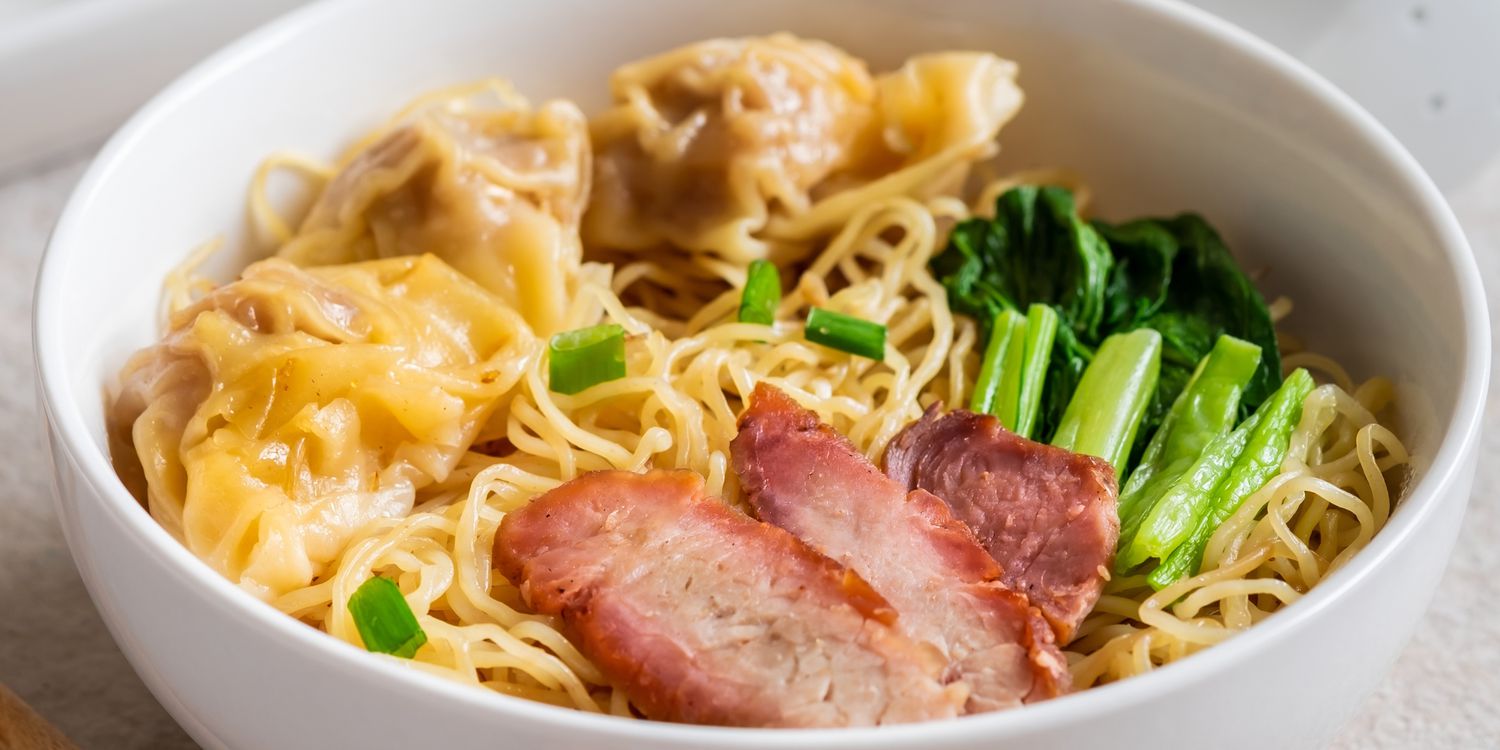
My family enjoys the noodles with wontons, blanched bok choy or gai lan (Chinese broccoli), and a variety of proteins (pork, chicken, and duck). While Mama makes a big batch of barbecued char siu pork for Chinese New Year, she gets roasted ducks from a local restaurant and heads to Costco for rotisserie chickens and bags of Bibigo chicken and cabbage mini wontons.
How To Make Mom’s Noodles
Patricia Kaowthumrong
What You’ll Need:
- Fresh wonton noodles: Packages of thin wonton noodles (also called egg noodles) are available in the refrigerated section of many Asian grocery stores, such as H Mart and Great Wall Supermarket. Look for the Lucky K.T. Co. or Southern California Food Inc. brands.
- Fried garlic oil or olive oil: Fried garlic oil is a widely used condiment in Thai and other Southeast Asian cuisines, but regular olive oil (not extra-virgin) works well. You can also make some garlic-infused olive oil.
- Soy sauce: Mom prefers cooking Thai and Chinese food with thin soy sauces, which are often less sweet and lighter in color than regular or dark soy sauces. Feel free to use whatever variety you have in your pantry, though (for example, Kikkoman).
- Granulated sugar: This pantry staple adds a touch of sweetness.
- Proteins: Roasted duck and sliced char siu pork are the most common proteins served with wonton noodles at restaurants. But rotisserie chicken is an easier-to-source—and equally delicious—alternative.
- Greens: Use any blanched or sautéed green vegetable, such as broccoli, bok choy, or spinach, ingredients that are also consumed during the Chinese New Year to symbolize wealth because they’re the color of cash.
- Frozen wontons: These are great time-savers for those who don’t have time to whip up a batch of homemade wontons. We love Bibigo’s Mini Chicken and Cilantro Wontons, which are the perfect size for eating with noodles (and in wonton soup).
- Diced scallions and cilantro: These aromatic garnishes add a pop of freshness to almost any noodle dish, including this one.
Mom’s Wonton Noodles Recipe
Getty Images
Ingredients
- 1 pound package fresh wonton noodles
- 2 ½ tablespoons soy sauce
- 2 tablespoons fried garlic oil or olive oil
- 2 teaspoons white sugar
- Blanched greens (such as bok choy or broccoli)
- Cooked frozen wontons
- Proteins of your choice (such as sliced chicken, char siu pork, or duck)
Directions
- Bring a large pot of water (at least 2 quarts) to a boil over high heat.
- Gently unravel and loosen noodles on a cutting board or plate, being careful not to break them, so they stay as long as possible.
- Cook noodles in boiling water for about 30 seconds, carefully stirring continuously with a pair of chopsticks or kitchen tongs.
- Drain noodles; transfer to a bowl of cold water and swirl around.
- Drain noodles; transfer to a large bowl. Season with soy sauce, oil, and sugar; toss gently.
- Serve noodles with blanched greens, cooked wontons, and sliced proteins.
Tips for Making the Best Lucky Noodles
- Don’t overcook. Like pasta, wonton noodles get soggy if you boil them for too long, so set a timer for 30 seconds (or count to 30, like my mom) and remove them right away.
- Be gentle. If you want the luckiest noodles—who doesn’t?!—make sure you don’t tear them during the cooking process.
- Add broth. Leftover noodles and all of their accompaniments taste amazing in chicken or pork broth, which is often how you’ll find them served at Chinese restaurants.
- Spice things up. Drizzling with Sriracha or chili oil is an easy way to bring some heat to the dish.
- Substitute dry wonton noodles. If you can’t find fresh ones, these will work! Just follow the cooking directions on the package (they need to boil for 2 to 4 minutes, depending on the brand).