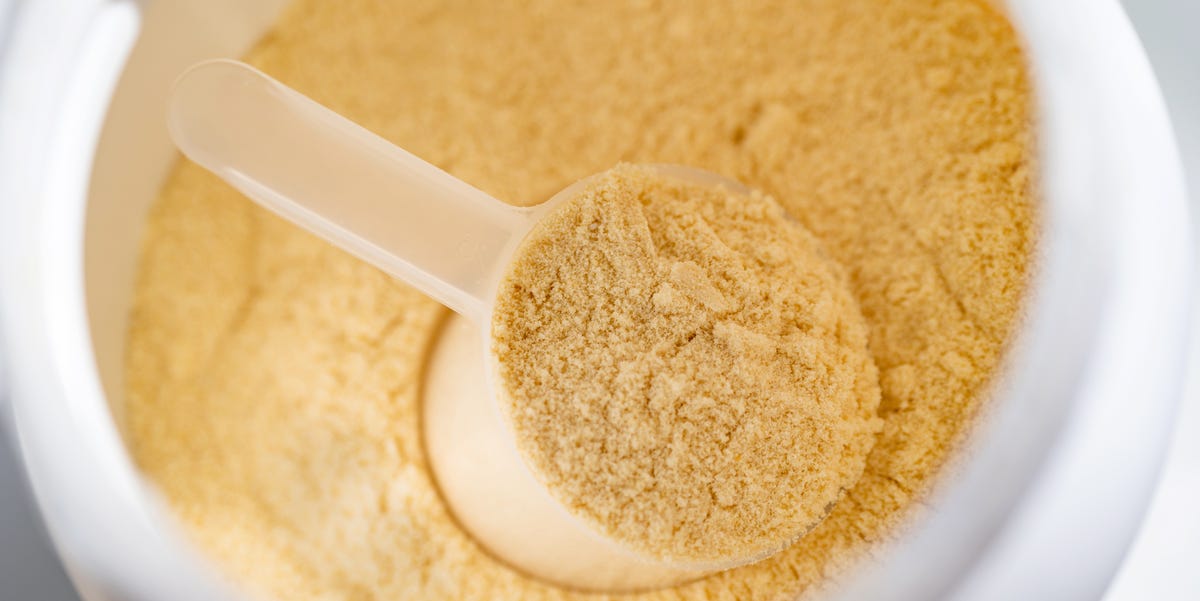
- A new study by Consumer Reports found popular protein powder brands with safe levels of lead.
- Many protein powders have been found to contain high levels of heavy metals in the past, but these are safe to consume.
- The supplement industry lacks strict regulations, so many unsafe products are on store shelves.
Last year, a study by Clean Label Project found shocking levels of toxins lurking in brand-name protein powders. Plant-based protein powders showed the highest levels, with many testing positive for heavy metals. Of all the products tested, a staggering 47% exceeded California’s Proposition 65 safety thresholds for toxic metals.
With so many concerned citizens, Consumer Reports (CR) took it upon themselves to test five of their readers’ most-used protein brands. The study found that four of the five products were below concern; one was slightly above but still considered acceptable for limited use.
“The results suggest that safer manufacturing is possible, even for chocolate-flavored products, which some in the industry have claimed are harder to keep clean. The findings also raise questions about why so many other protein powders on the market have elevated levels of heavy metals,” Consumer Reports says.
The outlet tested five reader-requested protein powders, including Premier Protein, Truvani, Equate, Clean Simple Eats, and Ritual, all in chocolate flavor. Four of the brands tested below Consumer Reports’ level of concern for lead, which is 0.5 micrograms per daily serving. Clean Simple Eats clocked in at 0.21 micrograms per serving, Equate contained 0.27 micrograms per serving, Premier Protein contained 0.38 micrograms per serving, and Truvani had 0.46 micrograms per serving. Ritual was slightly over Consumer Reports’ recommendation at 0.53 micrograms per serving, but the company noted that the lead levels were still low enough to safely have up to 6.5 servings weekly. “CR’s food safety experts say that the lower levels of lead found in these products make them a better choice for daily protein powder users,” the outlet reports.
The issue with protein powders is that there aren’t very strong laws regulating supplements, and, according to CR, there is also a lack of enforcement of existing laws, which creates an issue within the industry. In particular, high levels of lead consumption can cause long-term health complications in the kidneys, brain, and other organs. Those concerned should get their protein from whole-food sources, or, as CR’s recent study shows, from these five brands, which have lower lead levels deemed safe to consume. When in doubt, look for products that are tested by verified third parties, such as the Clean Label Project or NSF Certified for Sport.