Everyone thinks their grandma is special, but I have to take a second to brag, because my grandma was pretty exceptional. My grandma, Nana Lee, lived a long and rich life, passing earlier this year at 102(!) years old. It’s no surprise she became something of a local celebrity here at Allrecipes.
But here’s the thing—she was not the most prolific or amazing cook. As I wrote before, “Unlike many Allrecipes readers, I did not grow up with intricate pies and comforting casseroles gracing every visit to Grandma’s.” From heat-and-eat sides she passed off as homemade to Trader Joe’s desserts, my grandma was no stranger to a store-bought shortcut.
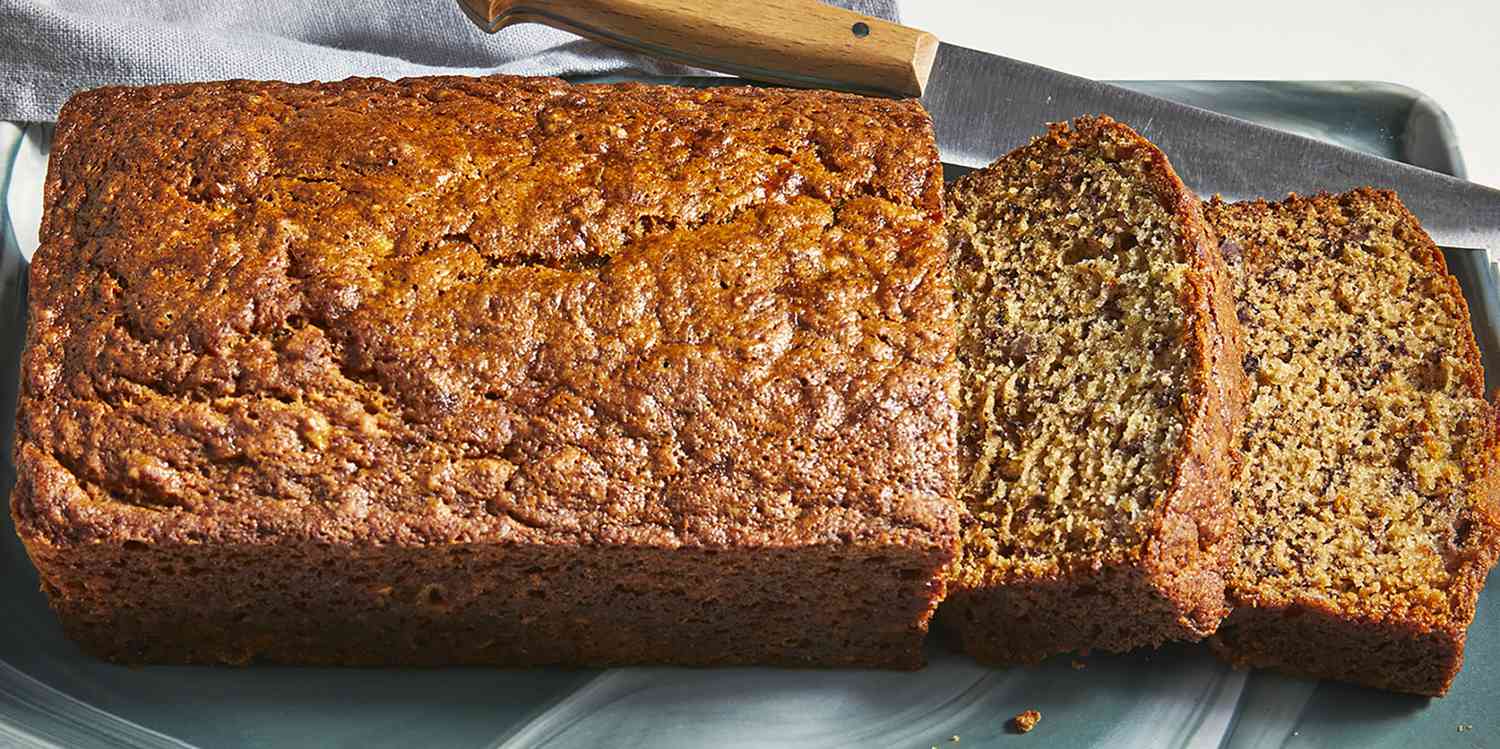
However, there were a few dishes she made from scratch, and made darn well. Banana bread is probably number one on the list. It was the one sweet treat she made for me and my sister as kids every time we visited, without fail—likely because it was a favorite of my grandpa’s, too. And I’ll be honest, until I found her recipe card, I thought my grandma’s banana bread came from a boxed mix (as was the case with so many of my other childhood favorite desserts).
When I called her last year to ask for her secret to her banana bread, I was surprised to hear her secret was really not so secret at all, but a tip that ensures the sweetest, most moist banana bread every time, no matter what recipe (or boxed mix) you use.
Allrecipes / Qi Ai
My Grandma’s Best Tip for Banana Bread
“The bananas have to be really, really ripe,” is what my nana told me. It seems like a no-brainer, but your definition of ripe is probably not the same as my grandma’s.
If you’re picturing a yellow banana with brown spots, I’m sorry to say, you’re wrong. We’re really talking overripe, not ripe, with a dark brown-to-black color throughout the peel. The bananas should be so soft that they barely require mashing.
It may sound off-putting, but my Nana Lee was not wrong. In fact, when I worked in a bakery, if the bananas we got in for our banana bread were not ripe enough, we would line them up on a sheet tray and bake them at a super low temperature until they were dark brown and so soft that the fruit practically slid out of the peel.
Dotdash Meredith Food Studios
Why Do Bananas Need to Be Ripe for Banana Bread?
The longer you allow a banana to ripen, the more the starches inside it break down into simple sugars. The pectin also breaks down, making it soften. Simply put, the sugar content goes up and the texture gets softer—two qualities you want for the base of your banana bread. The more natural sweetness and moisture in the fruit, the less you have to add to the final recipe.
You can also achieve the same result by freezing and thawing bananas; This tip actually took top spot in our taste test of tips for moist banana bread.
If you’re impatient or can’t wait for those bananas to brown on their own, there are plenty of ways to ripen bananas faster. Or, sometimes, to speed up the process, I will mash my bananas and add a teaspoon or two of sugar and let it macerate for a few minutes while I prepare my other ingredients. This allows the bananas to release their natural sugars and juices, much like the ripening process.
My Grandma’s Banana Bread Recipe
Other than those extra-ripe bananas, my Nana Lee’s banana bread recipe is pretty straightforward, with ingredients you probably have on hand. Sour cream gives it the perfect, plush texture and ensures it stays moist for days after baking, and butter makes it melt-in-your-mouth rich. She does have one more brilliant tip, though: Mixing the leavening agent (baking soda) in with the sour cream instead of adding it in with the dry ingredients. The acidity of the sour cream activates the alkaline baking soda, creating bubbles that start to lift the banana bread batter immediately, creating a softer, lighter cake with an open crumb.
In the end, is my grandma’s ripe banana tip revolutionary? No. But it is one that will fundamentally improve your loaf. And to this day, her banana bread is still the best I’ve ever had, so heed her advice and let those bananas sit just a little longer. Oh, and one final tip from my Nana: If a recipe ever calls for 2-3 bananas always go with 3. You’re welcome!
Here’s my Nana Lee’s full recipe if you want to make her banana bread for yourself.
Courtney Kassel
Can you be more specific about the content of your article? After reading it, I still have some doubts. Hope you can help me. https://accounts.binance.com/cs/register-person?ref=OMM3XK51
Thanks for sharing. I read many of your blog posts, cool, your blog is very good. https://accounts.binance.info/uk-UA/register-person?ref=XZNNWTW7
Thanks for sharing. I read many of your blog posts, cool, your blog is very good.
I don’t think the title of your article matches the content lol. Just kidding, mainly because I had some doubts after reading the article.
Thank you for your sharing. I am worried that I lack creative ideas. It is your article that makes me full of hope. Thank you. But, I have a question, can you help me? https://accounts.binance.com/ru-UA/register?ref=JVDCDCK4
Thanks for sharing. I read many of your blog posts, cool, your blog is very good.